
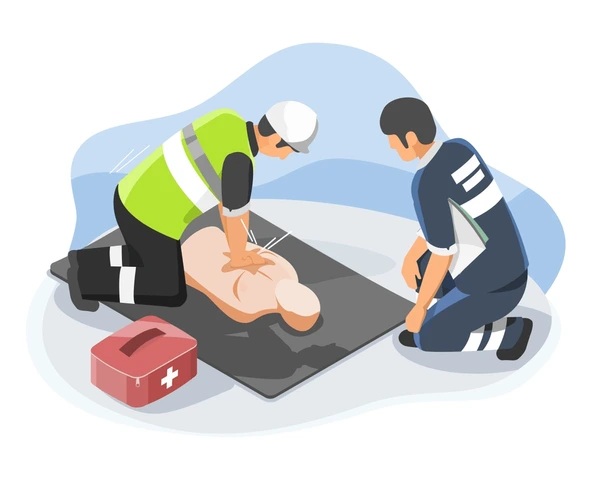




You know CPR. You've been certified for years. People ask you questions about it. You find yourself correcting technique when you see CPR scenes in movies. You've actually used it, maybe more than once.
At some point, a thought crosses your mind: "I could teach this."
And you're right. You probably could. But here's what nobody tells you about becoming a CPR instructor: knowing CPR and teaching CPR are completely different skills. You can perform flawless chest compressions and still be a terrible instructor. You can save lives yourself but struggle to prepare others to do the same.
Teaching CPR isn't just demonstrating on a mannequin and handing out certificates. It's managing different learning styles in the same room. It's correcting technique without discouraging students. It's making content engaging when you're teaching the same material for the hundredth time. It's handling the student who freezes up, the one who gets overconfident, and the one who asks impossible hypothetical questions.
The good news? 2026 offers more pathways to becoming a CPR instructor than ever before. Whether you're a healthcare professional looking to add teaching credentials, a fitness trainer who wants to offer more services, or someone passionate about emergency preparedness, there's an instructor course designed for your situation.
This guide breaks down the best CPR instructor courses available in 2026, from the major national certifications to specialized training programs. We'll cover what you actually learn, what it costs, how long it takes, and which programs are worth your time and money.
Why Become a CPR Instructor
Let's talk about the elephant in the room: becoming a CPR instructor isn't a path to riches. You're not going to quit your day job and retire on CPR teaching income. If that's your goal, stop reading now.
But if you're still here, there are genuinely good reasons to pursue instructor certification.
Multiply your impact: Teaching 20 people CPR creates 20 potential lifesavers. That's exponentially good. Your knowledge doesn't just help the people you encounter, it helps everyone those 20 people encounter.
Professional development: Instructor credentials enhance your resume in healthcare, fitness, education, public safety, and corporate wellness. It demonstrates expertise, leadership, and commitment to community safety.
Side income potential: While you won't get rich, CPR instructors can earn $200-$500 per class. Teaching a few classes monthly generates decent supplemental income. Some instructors build this into significant part-time revenue.
Career flexibility: Instructor status opens doors. Hospitals, fire departments, community colleges, corporate wellness programs, and fitness centers all need CPR instructors. It's a portable credential that travels with you.
Teaching skills: Instructor training makes you a better teacher overall. The skills transfer to training employees, coaching teams, or any situation where you need to teach practical skills.
Keep your own skills sharp: Teaching forces you to stay current. You can't teach outdated techniques. You'll maintain higher competence than people who just renew their own certification every two years.
What CPR Instructor Training Actually Involves
Most people think instructor courses just teach you to teach CPR. That's partially true, but incomplete.
Quality instructor programs teach you to be an educator, not just a CPR expert who stands in front of people. Here's what comprehensive instructor training covers:
Adult learning principles: How adults learn differently than children. How to structure information for retention. How to accommodate different learning styles in one class.
Instructional techniques: Demonstration methods, effective feedback delivery, error correction strategies, and how to run hands-on practice sessions efficiently.
Classroom management: Keeping classes on schedule, handling difficult participants, managing groups of varying skill levels, and dealing with medical emergencies during class (yes, it happens).
Course logistics: Registration, materials management, venue setup, certification processing, and administrative requirements.
Current CPR guidelines: Deep knowledge of current protocols, the science behind them, and how to explain why techniques matter, not just what to do.
Assessment skills: How to evaluate student competence, when someone needs more practice, and how to fail students who don't meet standards (the hardest part of teaching).
Most instructor courses also include practice teaching, where you actually teach portions of CPR classes under supervision and receive feedback on your instruction.
Best American Heart Association Instructor Courses
1. AHA BLS Instructor Course
Provider: American Heart Association
Cost: $300-$500 depending on training center
Prerequisites: Current BLS Provider certification, completion of online modules, teaching demonstration
Duration: 6-8 hours in-person after online coursework
Certification validity: 2 years
What you'll learn: How to teach BLS for Healthcare Providers courses using AHA curriculum. Covers teaching methodology, student evaluation, course management, and AHA administrative requirements. You'll learn the instructor-led format, video-based format, and blended learning approaches.
Why it's the gold standard: AHA is the most recognized CPR training organization globally. Their instructor credential carries weight. As a BLS instructor, you can teach the healthcare-level CPR that nurses, doctors, EMTs, and other medical professionals require.
The course is rigorous. AHA doesn't hand out instructor status lightly. You'll complete online modules covering teaching techniques and course content, then demonstrate your teaching ability in person. You need to show you can teach effectively, not just perform CPR well.
Best for: Healthcare professionals (nurses, paramedics, respiratory therapists) who want to teach colleagues, hospital educators, corporate wellness coordinators in healthcare settings, serious CPR training professionals.
Teaching opportunities: Hospitals, healthcare training centers, nursing schools, medical facilities, AHA training centers, corporate healthcare clients. BLS is required for millions of healthcare workers, creating steady demand.
Income potential: $300-$600 per BLS class depending on location and client. Teaching 4 classes monthly generates $1,200-$2,400 in supplemental income.
2. AHA Heartsaver Instructor Course
Provider: American Heart Association
Cost: $250-$400
Prerequisites: Current AHA CPR certification, online coursework completion
Duration: 4-6 hours in-person
Certification validity: 2 years
What you'll learn: How to teach Heartsaver CPR AED, First Aid, and combined courses to lay responders. Covers teaching civilians, community groups, workplace safety teams, teachers, coaches, and the general public.
Heartsaver instruction is different from healthcare teaching. Your students aren't medical professionals. They might have no medical background at all. You'll learn how to make content accessible to complete beginners while still teaching effective lifesaving skills.
Why it's valuable: Heartsaver instructors teach the largest market, everyone who needs CPR but isn't a healthcare provider. Teachers, coaches, daycare workers, lifeguards, corporate employees, parents, and community volunteers all need Heartsaver training.
The course is less intensive than BLS instructor training because your students have simpler learning objectives. But teaching civilians effectively requires different skills than teaching healthcare workers.
Best for: Fitness trainers, teachers, coaches, community educators, workplace safety coordinators, anyone wanting to teach general public CPR.
Teaching opportunities: Schools, gyms, community centers, churches, corporate offices, youth sports programs, anywhere groups need basic CPR training.
Income potential: $150-$400 per Heartsaver class. Higher volume potential than BLS since the market is broader.
3. AHA ACLS and PALS Instructor Courses
Provider: American Heart Association
Cost: $500-$800 per course
Prerequisites: Current ACLS or PALS provider certification, substantial clinical experience, BLS instructor status often required
Duration: 1-2 days per course
Certification validity: 2 years
What you'll learn: How to teach advanced resuscitation courses for critical care providers. ACLS covers adult cardiac emergencies with advanced interventions. PALS focuses on pediatric emergencies.
These are the most demanding instructor certifications. You're teaching experienced healthcare providers complex algorithms, pharmacology, ECG interpretation, and team dynamics in high-stakes situations.
Why it's challenging: ACLS and PALS students are seasoned professionals, emergency physicians, ICU nurses, flight medics. They ask hard questions. They expect expert instruction. You need both extensive clinical knowledge and excellent teaching ability.
Best for: Experienced critical care nurses, emergency physicians, paramedics with years of advanced practice, hospital educators with clinical backgrounds.
Teaching opportunities: Hospitals, emergency medical services, flight programs, critical care training centers. Limited to healthcare environments.
Income potential: $500-$1,000+ per course. Lower volume but higher pay per class. Teaching monthly can generate $6,000-$12,000 annually in supplemental income.
Best Red Cross Instructor Courses
4. Red Cross CPR/AED Instructor Course
Provider: American Red Cross
Cost: $250-$400
Prerequisites: Current Red Cross CPR certification, minimum age 17
Duration: Blended format, online modules plus 4-6 hours in-person
Certification validity: 2 years
What you'll learn: How to teach Adult, Child, and Infant CPR/AED courses using Red Cross curriculum. Covers teaching techniques, student assessment, course administration, and Red Cross policies.
Red Cross emphasizes adaptable teaching. Their courses serve diverse audiences from corporate employees to community groups to school staff. You'll learn to adjust your teaching for different groups.
Why it's comprehensive: Red Cross instructor training includes substantial online learning before you ever walk into the in-person portion. You'll complete modules on teaching adults, classroom management, course design, and assessment techniques. This front-loads the theory so in-person time focuses on practice teaching.
The course includes monitored teaching sessions where you teach actual course segments and receive feedback from instructor trainers.
Best for: Community educators, workplace safety coordinators, fitness professionals, anyone wanting to teach broad audiences CPR and first aid.
Teaching opportunities: Similar to AHA Heartsaver, broad market including businesses, schools, community organizations, recreation programs.
5. Red Cross First Aid/CPR/AED Instructor
Provider: American Red Cross
Cost: $300-$450
Prerequisites: Current certifications in courses you'll teach
Duration: Blended format, online modules plus 6-8 hours in-person
Certification validity: 2 years
What you'll learn: How to teach combined CPR and first aid courses. Covers broader emergency response beyond just cardiac events, bleeding control, shock management, injuries, environmental emergencies, and medical conditions.
First aid instruction is more complex than CPR-only teaching because the content is broader and more varied. You're preparing people for diverse emergencies, not just one type.
Why it's more versatile: Combined instructor status lets you offer more comprehensive courses. Many organizations prefer one comprehensive training session over separate CPR and first aid classes. You can meet this need.
Best for: Instructors wanting maximum versatility, wilderness guides, outdoor recreation professionals, workplace safety specialists, community emergency response team trainers.
Teaching opportunities: Broader than CPR-only instruction. Ideal for outdoor organizations, adventure programs, construction companies, manufacturing facilities, anywhere comprehensive emergency training is valued.
Independent and Specialized Instructor Programs
6. HSI (Health & Safety Institute) Instructor Development
Provider: Health & Safety Institute
Cost: $200-$350
Prerequisites: Current CPR certification
Duration: 1 day or blended online/in-person
Certification validity: 2 years
What you'll learn: How to teach HSI CPR, AED, and first aid programs. HSI offers a less rigid curriculum structure than AHA or Red Cross, giving instructors more teaching flexibility.
Why it's different: HSI emphasizes instructor autonomy. Once certified, you have more freedom in how you structure and deliver courses. Less prescriptive than AHA's video-based formats.
HSI certifications are accepted by many employers, though not as universally recognized as AHA or Red Cross. They're particularly common in corporate, industrial, and construction settings.
Best for: Instructors wanting more teaching flexibility, corporate trainers, industrial safety professionals, instructors in regions where HSI is well-established.
Teaching opportunities: Corporate clients, construction companies, industrial facilities, organizations that accept HSI certification.
7. ASHI (American Safety & Health Institute) Instructor Certification
Provider: American Safety & Health Institute
Cost: $195-$300
Prerequisites: None for some programs, current certification for others
Duration: 1 day
Certification validity: 2 years
What you'll learn: Teaching methods for ASHI emergency care courses including CPR, AED, first aid, bloodborne pathogens, and workplace safety topics.
Why it's accessible: ASHI has lower barriers to entry than AHA or Red Cross. Their instructor courses are shorter and less expensive. For people wanting to start teaching without major investment, ASHI provides an entry point.
Recognition varies by employer and region. Some organizations accept ASHI certifications readily. Others specifically require AHA or Red Cross.
Best for: New instructors testing the waters, corporate trainers in supportive organizations, supplemental credential for existing instructors.
8. NOLS Wilderness Medicine Instructor Course
Provider: National Outdoor Leadership School
Cost: $1,500-$2,500
Prerequisites: WFR or WEMT certification, substantial field experience
Duration: 5-7 days
Certification validity: 3 years
What you'll learn: How to teach wilderness first aid and wilderness first responder courses. Covers teaching in field environments, scenario-based education, extended patient care, and improvisation.
This isn't standard CPR instructor training. Wilderness medicine instruction teaches emergency care in remote environments where standard protocols don't apply. You'll learn to teach decision-making, not just procedures.
Why it's specialized: Wilderness medicine instruction requires deep field experience and teaching ability. Your students are guides, expedition leaders, and outdoor professionals who need to manage emergencies far from hospitals.
Best for: Experienced wilderness guides, outdoor educators, expedition leaders, search and rescue professionals, people with extensive backcountry medical experience.
Teaching opportunities: Outdoor education organizations, guide services, outdoor recreation programs, universities with outdoor programs, adventure companies.
Income potential: $800-$2,000+ per wilderness course. Lower volume but premium pricing. Seasonal work often concentrated during summer months.
What Nobody Tells You About Becoming an Instructor
The Reality of Teaching CPR
Your first class will be terrifying: Even with excellent training, teaching your first class feels overwhelming. You'll forget things. You'll stumble over explanations. Students will ask questions you don't immediately know how to answer. This is completely normal. Every instructor survives it.
Not everyone passes: You will eventually fail students. Someone won't meet competency standards. Failing people is uncomfortable, but necessary. CPR instructors who pass everyone regardless of competence are dangerous.
Classes rarely go exactly as planned: Equipment malfunctions. Students arrive late. Someone gets sick. Fire alarms go off. You learn to adapt.
Marketing matters as much as teaching: Being a great instructor means nothing if you can't get students. Building a teaching business requires marketing, networking, and business development skills.
Administrative work is substantial: Processing certifications, maintaining records, managing schedules, ordering supplies, handling payments, teaching is maybe 30% of the work. Administration is the other 70%.
Building Your Instructor Business
Start local: Your first students will likely be friends, family, coworkers, and local organizations. Build reputation locally before expanding.
Network aggressively: Connect with HR managers, safety coordinators, school administrators, recreation directors, corporate wellness programs. Your next 50 students come from professional relationships.
Specialize strategically: Consider focusing on specific industries or populations. Becoming "the instructor for construction companies" or "the pediatric CPR expert" differentiates you from generic instructors.
Quality over volume: Teaching one excellent class builds more future business than teaching three mediocre ones. Satisfied students refer others. Dissatisfied students damage reputation.
Maintain professionalism: Show up prepared. Start on time. Have functioning equipment. Process certifications promptly. Basic professionalism separates successful instructors from struggling ones.
Choosing the Right Instructor Course
Consider your target audience: Want to teach healthcare workers? Get AHA BLS instructor status. Teaching general public? Heartsaver or Red Cross works better.
Evaluate recognition requirements: Check what certifications employers in your area accept before investing in instructor training. Regional preferences vary.
Assess your teaching experience: Never taught anything before? Start with Heartsaver or basic Red Cross. Experienced educator? Jump into BLS or more advanced programs.
Factor in business plans: Teaching occasionally for your employer? Simple instructor certification works. Building a business? Consider multiple certifications and specializations.
Calculate realistic ROI: Instructor courses cost $200-$800. How many classes will you need to teach to recoup costs? How long will that take? Be realistic about business potential.
Examine ongoing requirements: Instructor credentials require renewal, continuing education, and often minimum teaching activity. Understand long-term commitments before starting.
After Instructor Certification
Getting certified is step one. Building teaching competence takes time.
Teach frequently initially: Your first 10 classes build foundational teaching skills. Schedule them close together to build momentum and competence.
Seek mentorship: Connect with experienced instructors. Most are happy to share advice, answer questions, and help new instructors avoid common mistakes.
Collect feedback: Ask students for honest feedback after classes. What worked? What didn't? Where were you unclear? Use this to improve.
Video yourself teaching: Watching yourself teach reveals verbal tics, unclear explanations, and areas for improvement you won't notice while teaching.
Join instructor communities: Online forums, local instructor groups, and professional associations provide support, advice, and business opportunities.
Stay current: CPR guidelines change. Teaching methods evolve. Attend refreshers, read updates, and continuously improve your craft.
Conclusion
Becoming a CPR instructor isn't for everyone. It requires investment, ongoing commitment, and business development skills if you're teaching independently. The financial returns are modest unless you build substantial volume.
But if you're passionate about emergency preparedness, enjoy teaching, and want to multiply your impact beyond just your own potential to save lives, instructor certification opens meaningful opportunities.
Stop wondering whether you should pursue instructor certification. Look at your motivation, assess the opportunities in your area, choose a program that fits your goals, and commit to learning not just CPR instruction, but excellent teaching..


