There's something almost suspicious about "free online courses." We've been conditioned to believe that valuable education costs money, lots of it. So when platforms offer university-level courses taught by professors from Stanford, MIT, and Harvard for free, it feels like there must be a catch.
Here's the reality: the catch is minimal. Most courses are genuinely free to take, with certificates being the optional paid component. The education itself, the lectures, materials, and learning, that's yours without paying anything.
In 2026, free online education has reached maturity. The experimental phase is over. Platforms have figured out what works, universities have committed to access, and millions of learners have proven that online courses can deliver real results when taken seriously.
Whether you want to code, analyze data, understand business, explore science, or develop creative skills, excellent free courses exist that can accelerate your growth dramatically. This guide breaks down the absolute best free online courses available in 2026, organized by field and purpose.
How We Define "Best" Free Courses
Before diving in, let's establish criteria. The courses here share these qualities:
- Genuinely free to access: Not trial periods or limited free versions
- High-quality instruction: Expert teachers who know their subjects deeply
- Substantial content: Real education, not marketing disguised as courses
- Proven results: Thousands of successful completions with positive outcomes
- Current and maintained: Updated content that reflects 2026 realities
- Respected credentials: When certificates are available, they carry weight
The list includes courses from universities, major companies, and specialized platforms. All deliver genuine value without requiring payment.
Best Free Courses for Programming and Tech
1. CS50: Introduction to Computer Science (Harvard)
Platform: edX and CS50.harvard.edu Instructor: Professor David Malan Time commitment: 12 weeks, 10-20 hours per week
This is the crown jewel of free programming education. Harvard's legendary intro CS course covers fundamental concepts through multiple languages including C, Python, JavaScript, SQL, HTML, and CSS. The problem sets are challenging, the projects are substantial, and completion demonstrates real capability.
Over a million people have started CS50, and those who finish gain a foundation equivalent to a semester at an elite university.
Why it's the best: Production quality is exceptional, teaching is engaging, and rigor matches Harvard's on-campus standards. This isn't simplified for online learners, it's the real thing.
2. freeCodeCamp Curriculum
Platform: freeCodeCamp.org Instructor: Community-developed Time commitment: 300+ hours per certification
FreeCodeCamp offers multiple certifications covering responsive web design, JavaScript, React, Node.js, Python, data analysis, machine learning, and more. Everything is project-based, you learn by building.
The platform is a nonprofit with no ads, no paywalls, and no tricks. Just comprehensive coding education designed by developers for aspiring developers.
Why it's the best: Completely free forever with no catches. The community is massive and supportive. Thousands have gotten developer jobs after completing certifications.
3. Python for Everybody (University of Michigan)
Platform: Coursera Instructor: Professor Charles Severance Time commitment: 8 months at 3 hours per week
This specialization teaches Python from absolute basics through data structures, databases, and web APIs. Dr. Chuck's teaching style makes programming accessible and even enjoyable for complete beginners.
The courses build progressively, taking you from zero knowledge to creating useful applications.
Why it's the best: Consistently rated as one of the best programming courses for beginners anywhere. Over a million enrollments with outstanding reviews.
4. The Odin Project
Platform: theodinproject.com Instructor: Community-developed Time commitment: 1000+ hours for full stack path
This is a complete full-stack web development curriculum covering HTML, CSS, JavaScript, Ruby, Rails, Node.js, and more. It's entirely free and open-source, with no paywalls at any point.
The curriculum emphasizes best practices, real-world workflows, and professional development habits from the beginning.
Why it's the best: Comprehensive education that takes complete beginners to job-ready developers. The project-based approach builds an impressive portfolio.
Best Free Courses for Data Science and Analytics
5. Google Data Analytics Professional Certificate
Platform: Coursera Instructor: Google Career Certificates team Time commitment: 6 months at 10 hours per week
Google designed this to prepare people for entry-level data analyst roles. You'll learn data cleaning, analysis, and visualization using Excel, SQL, R, and Tableau. The capstone involves real case studies and portfolio projects.
Note: While auditing is free, the certificate requires Coursera subscription. However, financial aid is widely available, making it free for those who qualify.
Why it's the best: Created by Google specifically for hiring purposes. They've publicly stated this certificate is sufficient for their entry-level analyst roles, and other companies have followed.
6. Data Science: R Basics (Harvard)
Platform: edX Instructor: Professor Rafael Irizarry Time commitment: 8 weeks, 1-2 hours per week
This course introduces R programming for data analysis and visualization. It's practical and accessible, focusing on doing data science rather than just understanding theory.
This is the first in Harvard's Professional Certificate in Data Science, but taking just this course provides useful R skills independently.
Why it's the best: Harvard quality without Harvard price. Professor Irizarry makes statistics approachable and emphasizes reproducible research practices.
7. IBM Data Science Professional Certificate
Platform: Coursera Instructor: IBM Skills Network Time commitment: 6 months at 5 hours per week
This comprehensive program covers Python, SQL, data visualization, machine learning, and more. You'll complete real projects using Jupyter Notebooks and other industry tools.
Why it's the best: Hands-on training in tools actual data scientists use. IBM's name carries weight, and the practical focus prepares you for real work.
Best Free Courses for Business and Marketing
8. Business Strategy (University of Virginia)
Platform: Coursera Instructor: University of Virginia Darden School professors Time commitment: 5 months at 3 hours per week
This specialization covers strategic analysis, competitive advantage, business models, and leadership. Case studies from real companies illustrate concepts throughout.
Darden is consistently ranked among the top business schools globally, and these professors teach MBA students the same material.
Why it's the best: MBA-level business education without the six-figure tuition. The case method approach develops strategic thinking that applies across industries.
9. Digital Marketing (University of Illinois)
Platform: Coursera Instructor: University of Illinois faculty Time commitment: 8 months at 2 hours per week
This specialization covers digital marketing holistically: analytics, social media, SEO, 3D printing and digital tools, and strategy. You'll create complete campaigns and learn to measure their effectiveness.
Why it's the best: Goes beyond tactics to teach strategic thinking. The analytics focus is crucial for modern marketing roles. Comprehensive coverage of digital channels.
10. Financial Markets (Yale)
Platform: Coursera Instructor: Professor Robert Shiller (Nobel Prize winner) Time commitment: 7 weeks at 8-12 hours per week
This course explores risk management and behavioral finance, taught by an economics Nobel laureate. You'll understand how financial markets work, why they sometimes fail, and the role of finance in society.
Why it's the best: Learning from a Nobel Prize winner is rare. Shiller's insights on behavioral economics and market psychology are foundational to modern finance understanding.
Best Free Courses for Creative Skills
11. Graphic Design Specialization (CalArts)
Platform: Coursera Instructor: California Institute of the Arts faculty Time commitment: 6 months at 4 hours per week
This specialization covers design fundamentals: typography, imagery, shape, color, and composition. You'll create designs across different media and develop a cohesive design portfolio.
CalArts is one of the world's leading art schools, and this program provides rigorous design education.
Why it's the best: Professional art school education in design fundamentals. The project-based approach builds a portfolio while teaching principles.
12. Introduction to Music Theory (Berklee)
Platform: Coursera Instructor: Berklee College of Music faculty Time commitment: 4 weeks at 6-8 hours per week
This course covers basic music theory fundamentals including scales, intervals, chords, and composition. You'll learn to read music and understand how it's constructed.
Berklee is one of the premier music schools worldwide, known for contemporary and jazz education.
Why it's the best: Professional music education from a top school. Makes music theory accessible to complete beginners while providing solid foundations.
Best Free Courses for Personal Development
13. Learning How to Learn (University of California San Diego)
Platform: Coursera Instructor: Dr. Barbara Oakley and Dr. Terrence Sejnowski Time commitment: 4 weeks at 2-4 hours per week
This course teaches the neuroscience of learning, memory techniques, procrastination strategies, and effective study methods. The techniques apply to learning any subject.
With over 3 million enrollments, it's one of the most popular online courses ever created.
Why it's the best: Transforms how you approach all future learning. The techniques are research-backed and immediately applicable. Taking this first improves every subsequent course.
14. The Science of Well-Being (Yale)
Platform: Coursera Instructor: Professor Laurie Santos Time commitment: 10 weeks at 2 hours per week
This course explores what psychological research reveals about happiness. You'll learn why our expectations about happiness are often wrong and practice concrete techniques to increase well-being.
This is Yale's most popular course, taken by over 4 million people online.
Why it's the best: Research-based approach to improving life satisfaction. The rewiring exercises provide practical tools, not just theoretical knowledge.
15. Mindshift: Break Through Obstacles to Learning (McMaster)
Platform: Coursera Instructor: Dr. Barbara Oakley Time commitment: 4 weeks at 2 hours per week
This course helps you learn effectively throughout your life and career. It covers career change, overcoming stereotypes, learning new skills, and staying relevant in changing fields.
Why it's the best: Particularly valuable for career changers and lifelong learners. Addresses psychological barriers to learning new things.
Best Free Courses for Health and Science
16. Introduction to Psychology (Yale)
Platform: Open Yale Courses Instructor: Professor Paul Bloom Time commitment: Full semester course
This is Yale's actual Introduction to Psychology course, made freely available. It covers perception, cognition, development, emotion, personality, psychopathology, and social psychology.
Why it's the best: Complete university course from Yale. Professor Bloom is an engaging lecturer who makes complex psychological concepts accessible and fascinating.
17. Medical Neuroscience (Duke)
Platform: Coursera Instructor: Duke University faculty Time commitment: 12 weeks at 12-16 hours per week
This rigorous course covers the structure and function of the human nervous system. You'll learn neuroanatomy, neural signaling, sensory systems, motor systems, and higher brain functions.
Why it's the best: Graduate-level neuroscience education. Challenging but incredibly rewarding for anyone interested in how the brain works.
Best Free Courses for Emerging Technologies
18. AI For Everyone (DeepLearning.AI)
Platform: Coursera Instructor: Andrew Ng Time commitment: 4 weeks at 3 hours per week
This non-technical course explains what AI is, what it can and cannot do, and how it's transforming industries. Perfect for anyone who needs to understand AI without learning to code it.
Andrew Ng is a legendary figure in AI education and makes complex topics accessible.
Why it's the best: Demystifies AI without requiring technical background. Essential knowledge for professionals in any field as AI transforms work.
19. Machine Learning Specialization (Stanford/DeepLearning.AI)
Platform: Coursera Instructor: Andrew Ng Time commitment: 2 months at 10 hours per week
This teaches supervised and unsupervised learning, neural networks, and best practices for machine learning. You'll implement algorithms in Python and build machine learning models.
Why it's the best: Updated version of Andrew Ng's classic course. Makes machine learning accessible to people with basic programming and math skills.
20. Blockchain Basics (University at Buffalo)
Platform: Coursera Instructor: University at Buffalo faculty Time commitment: 4 weeks at 5 hours per week
This course explains blockchain fundamentals, smart contracts, and decentralized applications. You'll understand the technology behind cryptocurrencies and its broader applications.
Why it's the best: Technical explanation without hype. Helps you understand what blockchain actually is and where it makes sense to use.
Best Free Courses for Career Skills
21. English for Career Development (University of Pennsylvania)
Platform: Coursera Instructor: University of Pennsylvania faculty Time commitment: 5 weeks at 3-5 hours per week
This course develops English communication skills for job searching and career development. Covers resumes, interviews, networking, and professional communication.
Why it's the best: Essential for non-native English speakers advancing their careers. Practical focus on actual workplace communication.
22. Successful Negotiation (University of Michigan)
Platform: Coursera Instructor: Professor George Siedel Time commitment: 7 weeks at 1-3 hours per week
This course teaches negotiation strategies applicable to business, legal, and personal situations. You'll learn to plan, execute, and analyze negotiations effectively.
Why it's the best: Negotiation affects salaries, contracts, conflicts, and deals throughout your career. These skills provide lasting value in any profession.
Platforms Offering the Best Free Courses
Understanding where to find free courses helps you navigate the landscape:
Coursera: University courses and professional certificates. Most allow free auditing with paid certificates. Financial aid makes certificates free for qualifying learners.
edX: Similar to Coursera, offers university courses with free access and optional paid certificates. Founded by MIT and Harvard.
freeCodeCamp: Completely free coding education with no paywalls or ads. Nonprofit model focused purely on education access.
Khan Academy: Free K-12 and college-level courses in math, science, economics, and more. Entirely nonprofit with no paid tiers.
MIT OpenCourseWare: Complete MIT courses with materials freely available. No certificates but unlimited access to course content.
YouTube University Channels: Stanford, MIT, Harvard, and others publish course lectures freely on YouTube.
Open Yale Courses: Complete Yale courses freely available with no registration required.
How to Choose the Right Free Courses
With thousands of options, selection matters:
Match to goals: Career change requires comprehensive certificates. Skill development needs targeted courses. Exploration benefits from shorter introductions.
Check prerequisites: Don't start advanced courses without foundations. Conversely, don't waste time on beginner courses if you already know basics.
Read recent reviews: Technology and fields evolve. Recent reviews indicate whether content is current and teaching remains effective.
Verify time commitment: Be honest about available time. A course requiring 20 hours weekly won't work if you have 5.
Consider instructor credentials: Look for professors from respected universities or practitioners with industry experience.
Assess your learning style: Video lectures? Interactive exercises? Reading? Pick courses matching how you learn best.
Making Free Courses Actually Work
Here's the uncomfortable truth: completion rates for free online courses are low, often under 10%. The courses aren't the problem, follow-through is.
Strategies that work:
Commit publicly: Tell friends, post on social media, or join study groups. Public commitment increases completion.
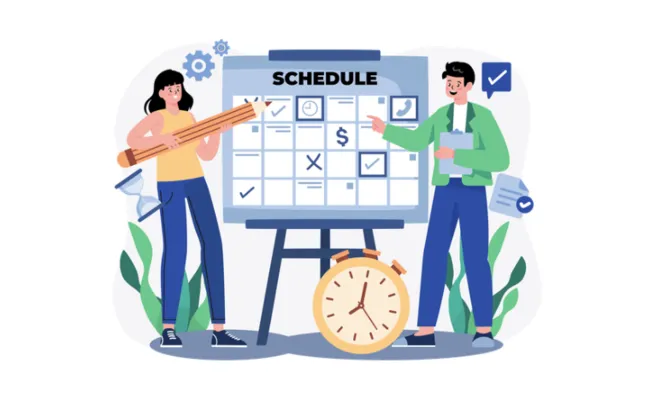
Schedule it: Block specific times for coursework. Treat it like a class you're paying for, not something you'll get to eventually.
Take notes actively: Don't just watch passively. Write, practice, engage. Active learning dramatically improves retention.
Do all assignments: Skipping problem sets feels efficient but sabotages learning. The struggle is where growth happens.
Apply immediately: Use new skills in work projects, personal endeavors, or additional practice beyond course requirements.
Join communities: Course forums, Reddit groups, or Discord servers connect you with fellow learners for support and accountability.
Start easy: Your first course shouldn't be the hardest one. Build completion confidence before tackling advanced topics.
The Certificate Question
Most free courses offer optional paid certificates. Should you buy them?
Get certificates if:
- The credential would help your job search or advancement
- You need external motivation to finish
- The issuer (Google, IBM, Harvard) carries weight in your field
- You want verifiable proof on LinkedIn
Skip certificates if:
- You're learning for pure interest
- Your goal is knowledge, not credentials
- The cost is financially burdensome
- Your field doesn't value online certificates
Remember: the learning is what matters. Certificates are nice but secondary to actual skill development.
Free Courses vs. Paid Alternatives
When should you pay for courses instead?
Stick with free when:
- You're exploring interests before committing
- Quality free options exist in your field
- Budget is constrained
- You're self-motivated and disciplined
Consider paid when:
- You need structured accountability and deadlines
- Intensive bootcamps fit your learning style better
- You want job placement assistance
- The paid course offers unique content unavailable free
Many successful professionals have learned entirely through free resources. Others benefit from paid programs' structure and support. Both paths work, choose based on your situation.
Conclusion
In 2026, high-quality education is more accessible than ever in human history. You can learn from Nobel laureates, top university professors, and leading industry experts without geographic barriers or financial constraints.
The barrier isn't access, it's commitment. These courses require time, effort, and persistence. They're not easier than traditional education, just more accessible.
Thousands of people have changed careers, advanced professionally, and transformed their understanding through free online courses. There's no reason you can't be one of them.
The courses are waiting. The instructors are ready. The only question is whether you'll invest the time to take advantage of this remarkable opportunity.
Stop researching. Pick one course from this guide. Block time in your calendar. Start today.
Your future self will thank you for beginning now rather than continuing to plan for someday that never comes.